
Look deep into nature, and then you will understand everything better.
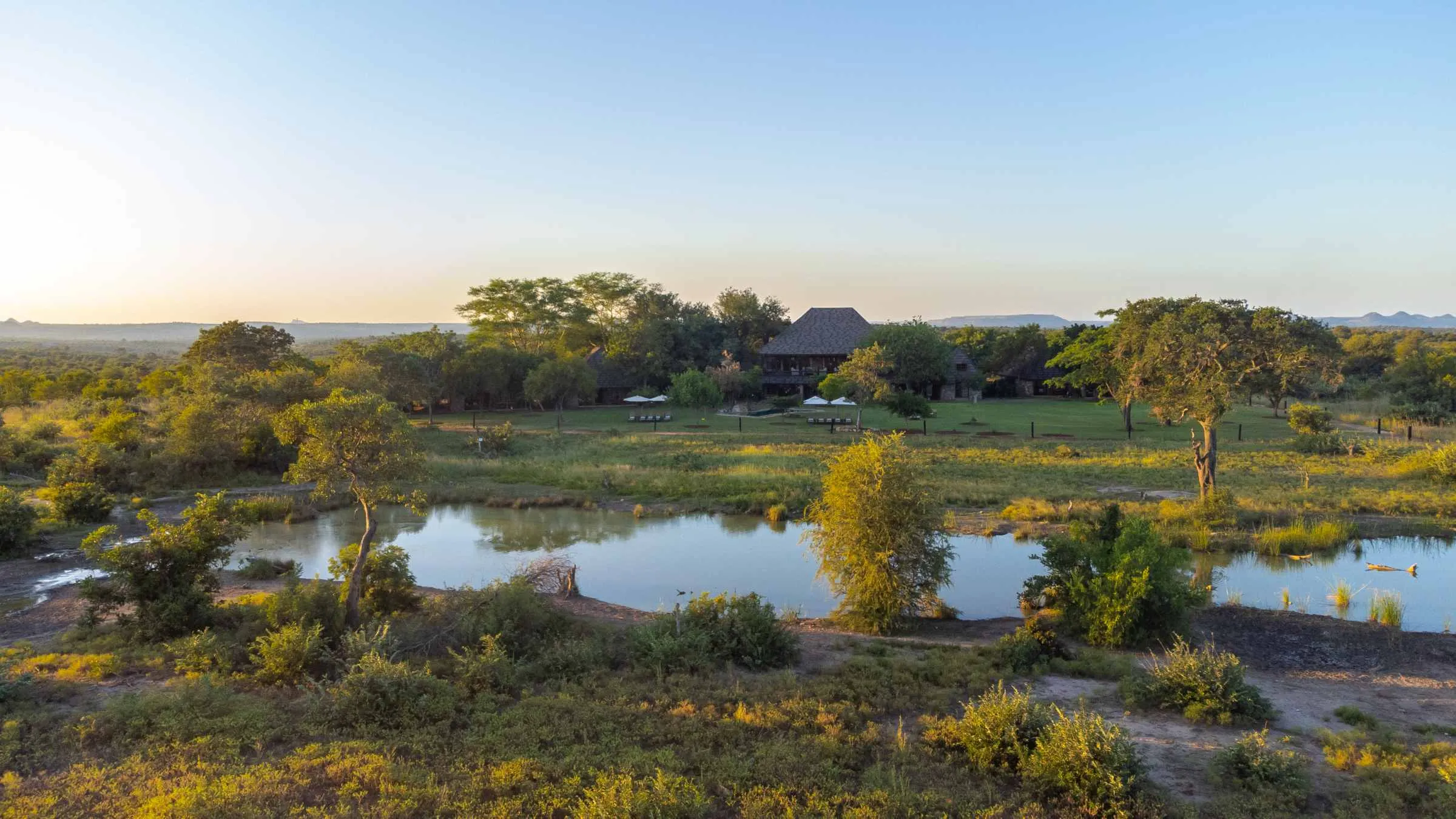
There is a particular morning at Nzumba — somewhere between coffee in hand and the first long shadows lifting from the bush — when you understand why we built the lodge where we did. The waterhole sits twenty metres from the main deck. Twenty metres. Close enough that when an elephant comes to drink, you hear the suck and slap of water before you see her break the treeline.
We did not put the lodge near the waterhole. We put it on top of it.
This is what we mean when we talk about the true heart of Nzumba. The Big Five matter. The drives matter. The food, the staff, the chalets — they all matter, and we believe each is its own quiet excellence. But the thing nobody quite prepares you for is the day you don’t leave the property at all. You sit on your verandah with a book. You don’t get five pages in. A breeding herd arrives. They drink, they bathe, the calves do that thing where they spray themselves with mud until they look like miniature loaves of brown bread. They leave. You don’t open the book again because now three giraffes are coming.
By midday, you have seen more game from your own deck than most people see on a full drive elsewhere.
What the waterhole gives you
It is the most democratic luxury we offer. You don’t need to be on a drive. You don’t need to be ready, kitted, hatted. You can be barefoot in your towel. You can be eating brunch. You can be on the phone with your sister back home, holding the camera out so she can hear the elephants without believing you. The waterhole doesn’t care. It performs anyway.
The cast rotates: elephants are most reliable in the cool hours, kudu and impala drift through all day, giraffes are an afternoon habit, and at night you’ll hear hippos grunting and lions calling somewhere further west. If you wake at 4am to use the bathroom (and you will — the bush wakes you), pause at the window. We see leopards drinking in the dark more often than you’d expect.
Why we never close the curtains
The chalets are positioned so that the windows face the water. Some lodges design rooms inward, toward the corridor, toward the bed. We designed ours outward, toward whatever the bush is doing at any given moment. It means the first thing you see when you wake is not a wall — it is a horizon of camelthorn and acacia and, with luck, an elephant working her trunk along the high branches.
This is also why we call the waterhole the heart. A heart is not the showpiece. A heart is the thing that keeps everything else alive. The drives are still our spine — those are the moments that take you out into the wider Klaserie, into the deep tracking, into the lion sightings and leopard finds. But the waterhole is what stays with you when you’ve gone home.
“We saw more wildlife in three days from our private veranda than on some entire safaris elsewhere.” — Lisa P., Colorado
That is the line we hear most often. We never planned for it. We just put the lodge where the wildlife was already going.
— Lee-Anne
[Placeholder body — Mike to replace with verbatim Lee-Anne klaseriecamps.com Bush Telegraph post when available.]