
Africa: you can see a sunset and believe you have witnessed the hand of God.
The first thing first-timers notice is what they don’t see.
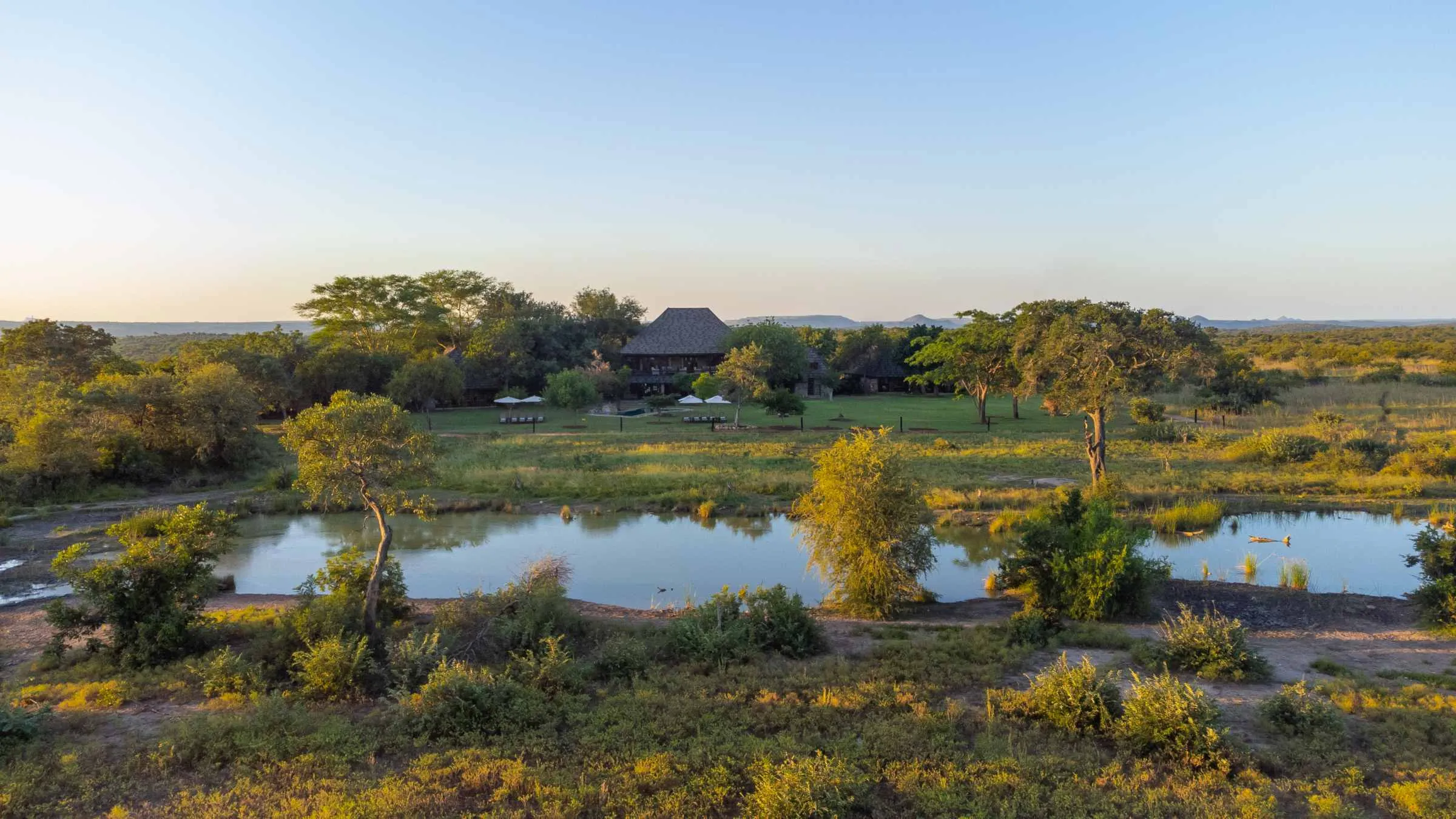
There is a particular moment, perhaps thirty minutes into your first drive at Nzumba, where it dawns on you that you haven’t seen another vehicle. Not one. The road in front of you is empty. The road behind you is empty. The bush stretches outward in every direction, and the only sound is the engine, the radio crackle of our guide checking in with the tracker, and somewhere ahead of you, the deep cough of a lion clearing his throat.
This is what we mean by low density.
What the Klaserie protocol gives us
The Klaserie Private Nature Reserve operates a two-vehicle-per-sighting maximum. In practice, the maximum we hit is usually one — yours. The reserve is large (60,000 hectares) and the operator count is small. Mathematics does the rest.
For you, this means three things, and they compound:
First, the sighting is yours. When our guide finds a leopard in a tree, you have all the time you need. There is no second vehicle waiting for a turn. There is no third vehicle queued behind that. You can sit at fifteen metres for twenty minutes if the leopard is still. You can move when she moves. The animal sets the pace, not the schedule.
Second, the photography is real. No vehicles in your frame. No lens caps clicking from a neighbouring guide. The light at golden hour falls on grass and animal, not on a Land Cruiser parked nine metres to your left. Photographers tell us this is the single biggest difference between Klaserie and the busier southern reserves. The image is just the image.
Third — and this is the part we have come to value the most — the bush is calm. Lions do not stand up and walk away. Elephants do not turn their backs. The herd of kudu you found in the open does not move into the thicket as soon as you arrive. The wildlife behaves as the wildlife behaves when nobody is around. You witness an ecosystem at its actual pace, not at a tourist’s pace.
What it asks of us
It asks our guides to find sightings themselves, not chase radio traffic. Our team has decades of combined experience in the Klaserie specifically — they know which drainage line a leopard is favouring this season, which pan the elephants pass through in the late afternoon, where the wild dogs denned last year. We don’t show you the same waterhole every drive. We don’t repeat each other’s sightings. Each drive is a piece of original tracking.
It also asks of you, the guest, a slight recalibration. If you have been on safari before — particularly in higher-density reserves — your first Nzumba drive may feel quieter than expected. The number of photographable moments per hour is similar. The number of experienced moments per hour is much higher. Slowing down is the point.
“You will often have unique sightings to yourself, allowing for quiet, unhurried moments that truly connect you to the wild.”
That line lives on our Experiences page. It is not marketing. It is a description of what happens.
Why the difference matters
We are not in competition with the larger reserves. They offer a different kind of safari — busier, more famous, more reliable for first-timers who want a checklist. Klaserie offers the safari you remember in detail twenty years later. The leopard in the marula tree, alone with you for fifteen minutes. The elephant calf trying to navigate a steep riverbank while his mother waited. The lion calling across a river at dusk with nobody else hearing him.
That is what low density means at Nzumba. It is not a marketing word. It is the structural choice that makes everything else possible.
— Lee-Anne
[Placeholder body — Mike to replace with verbatim Lee-Anne klaseriecamps.com Bush Telegraph post when available.]